 Periodic table
  Electron configuration
  Solubility table
  Metal operating range
  News
News .png)
Coban(II) florua có dạng chất rắn màu tím đến đỏ. Chìm và tan từ từ trong nước Coban(II) florua có thể được điều chế từ phản ứng của coban(II) chloride khan hoặc coban(II) oxit với hydro florua: CoCl2 + 2HF → CoF2 + 2HCl CoO + 2HF → CoF2 + H2O
Search substance
Please enter substance to start the search
| Tính chất | Coban(II) florua | Bari peroxit |
|---|---|---|
| Tên tiếng Việt | Coban(II) florua | Bari peroxit |
| Tên tiếng Anh | carbonyl fluoride | barium peroxide |
| Nguyên tử khối | 66.0069 | 169.3258 |
| Khối lượng riêng (kg/m3) | 5680 | |
| Nhiệt độ sôi (°C) | ||
| Màu sắc | ||
| Độ âm điện | ||
| Năng lượng ion hoá thứ nhất | ||
| Phương trình tham gia | Phương trình CoF2 tham gia | Phương trình BaO2 tham gia |
| Phương trình điều chế | Phương trình điều chế CoF2 | Phương trình điều chế BaO2 |
Coban(II) florua có dạng chất rắn màu tím đến đỏ. Chìm và tan từ từ trong nước Coban(II) florua có thể được điều chế từ phản ứng của coban(II) chloride khan hoặc coban(II) oxit với hydro florua: CoCl2 + 2HF → CoF2 + 2HCl CoO + 2HF → CoF2 + H2O
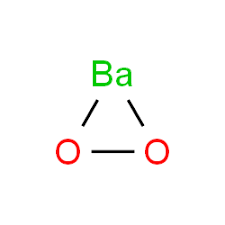
Bari peroxit có dạng chất rắn dạng hạt màu trắng xám, không tan trong nước, không cháy, nhưng làm tăng tốc độ đốt cháy vật liệu dễ cháy. Nó là một trong những peroxit vô cơ phổ biến nhất, và là hợp chất peroxit đầu tiên được phát hiện. Là một chất oxy hóa và tạo ra màu xanh lá cây sống động khi bắt lửa, nó được sử dụng trong pháo hoa; về mặt lịch sử, nó cũng được sử dụng làm tiền chất cho hydrogen peroxide. Bari peroxit sinh ra do phản ứng thuận nghịch của O2 với oxit bari. Peroxide hình thành ở khoảng 500°C và oxy được giải phóng trên 820°C. 2 BaO + O2 ⇌ 2 BaO2
Total rating:
Rating: / 5 star
Catalyst
normal
Temperature
350 - 700
Pressure
normal
Other conditions
normal
Catalyst
normal
Temperature
350 - 400
Pressure
normal
Other conditions
normal
Catalyst
normal
Temperature
normal
Pressure
normal
Other conditions
normal
Catalyst
normal
Temperature
< 500
Pressure
normal
Other conditions
normal
Catalyst
normal
Temperature
normal
Pressure
normal
Other conditions
normal
Catalyst
normal
Temperature
100
Pressure
vacuum
Other conditions
normal
Hydrogen is the first element in the periodic system table. Hydrogen is known to be the lightest of all, the most abundant in the Universe, the essential element for life
View moreHelium is the first rare gas element in the periodic system table. In the Universe, it ranks second in abundance after elemental hydrogen.
View moreLithium is the alkali metal element, located in the third cell in the periodic table system. Lithium is the lightest of all solid metals and can cut a knife.
View moreBeryllium is the lightest alkaline earth metal. Beryllium is found in precious stones such as emeralds and aquamarine. Beryllium and its compounds are both carcinogenic.
View moreCarbon is the non-metallic element in the sixth cell in the periodic system table. Carbon is one of the most important elements in all life, it is also known as the back.
View more