 Periodic table
  Electron configuration
  Solubility table
  Metal operating range
  News
News 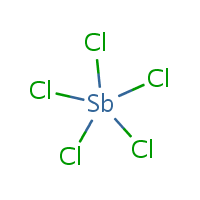
Search substance
Please enter substance to start the search
Điểm khác nhau giữa chất Antimon(V) clorua và chất 1,1-Dimetylhydrazin
So sánh các tính chất vật lý, hoá học giữa chất Antimon(V) clorua và chất 1,1-Dimetylhydrazin
Introduce
Điểm khác nhau giữa chất Antimon(V) clorua và chất 1,1-Dimetylhydrazin
| Tính chất | Antimon(V) clorua | 1,1-Dimetylhydrazin |
|---|---|---|
| Tên tiếng Việt | Antimon(V) clorua | 1,1-Dimetylhydrazin |
| Tên tiếng Anh | Antimony chloride; Pentachloroantimony(V); Antimony pentachloride; Amtimony pentachloride; Antimony(V) chloride; Antimony(V)pentachloride; Pentachloroantimony | |
| Nguyên tử khối | 299.0250 | 60.0983 |
| Khối lượng riêng (kg/m3) | 2.336 | 793 |
| Nhiệt độ sôi (°C) | Lỏng | |
| Màu sắc | Không màu hoặc màu vàng | |
| Độ âm điện | ||
| Năng lượng ion hoá thứ nhất | ||
| Phương trình tham gia | Phương trình SbCl5 tham gia | Phương trình (CH3)2NNH2 tham gia |
| Phương trình điều chế | Phương trình điều chế SbCl5 | Phương trình điều chế (CH3)2NNH2 |
Substance (CH3)2NNH2 (1,1-Dimetylhydrazin)
.png)
1,1-dimetylhydrazin là chất lỏng trong suốt không màu, có mùi giống amoniac. Ăn mòn da. Hòa tan trong nước. Hơi nặng hơn không khí và rất độc khi hít phải, hít phải có thể dẫn đến kích ứng mũi và họng, viêm kết mạc nhẹ, buồn nôn và nôn. Nó cũng có tính ăn mòn cao và gây kích ứng da, mắt và màng nhầy. Tổn thương gan ở người có thể xảy ra do tiếp xúc mãn tính (lâu dài) với 1,1-dimethylhydrazine. Việc tiếp xúc lâu dài với các vật chứa với nhiệt có thể khiến chúng bị vỡ và bong ra do phân hủy. Khi đốt cháy tạo ra oxit nitơ độc hại. Được sử dụng làm chất phóng tên lửa và chế tạo các chất hóa học khác. Không có thông tin về tác dụng sinh sản, phát triển hoặc gây ung thư của 1,1-dimethylhydrazine ở người. Tác dụng gây ung thư đã được quan sát thấy ở động vật tiếp xúc với 1,1-dimethylhydrazine qua đường hô hấp và đường uống, chủ yếu đối với phổi và gan. EPA đã không phân loại 1,1-dimethylhydrazine về khả năng gây ung thư. Cơ quan Nghiên cứu Ung thư Quốc tế (IARC) đã xếp 1,1- dimethylhydrazine vào Nhóm 2B, hóa chất có thể gây ung thư cho con người.
Total rating:
Rating: / 5 star
Loading...
The equations for preparation SbCl5
Catalyst
normal
Temperature
74 - 80
Pressure
normal
Other conditions
normal
Interesting facts about chemistry you may not know
Interesting facts about hydrogen - the lightest element in the periodic table.
Hydrogen is the first element in the periodic system table. Hydrogen is known to be the lightest of all, the most abundant in the Universe, the essential element for life
View moreInteresting facts about helium
Helium is the first rare gas element in the periodic system table. In the Universe, it ranks second in abundance after elemental hydrogen.
View moreInteresting facts about lithium
Lithium is the alkali metal element, located in the third cell in the periodic table system. Lithium is the lightest of all solid metals and can cut a knife.
View moreInteresting Facts About Beryllium
Beryllium is the lightest alkaline earth metal. Beryllium is found in precious stones such as emeralds and aquamarine. Beryllium and its compounds are both carcinogenic.
View moreInteresting Facts About Carbon
Carbon is the non-metallic element in the sixth cell in the periodic system table. Carbon is one of the most important elements in all life, it is also known as the back.
View more