 Periodic table
  Electron configuration
  Solubility table
  Metal operating range
  News
News 
Search substance
Please enter substance to start the search
Điểm khác nhau giữa chất Acid picric và chất Indi(III) selenua
So sánh các tính chất vật lý, hoá học giữa chất Acid picric và chất Indi(III) selenua
Introduce
Điểm khác nhau giữa chất Acid picric và chất Indi(III) selenua
| Tính chất | Acid picric | Indi(III) selenua |
|---|---|---|
| Tên tiếng Việt | Acid picric | Indi(III) selenua |
| Tên tiếng Anh | Diindium triselenide | |
| Nguyên tử khối | 466.5160 | |
| Khối lượng riêng (kg/m3) | ||
| Nhiệt độ sôi (°C) | ||
| Màu sắc | ||
| Độ âm điện | ||
| Năng lượng ion hoá thứ nhất | ||
| Phương trình tham gia | Phương trình HO-C6H2(NO2)3 tham gia | Phương trình In2Se3 tham gia |
| Phương trình điều chế | Phương trình điều chế HO-C6H2(NO2)3 | Phương trình điều chế In2Se3 |
Substance In2Se3 (Indi(III) selenua)
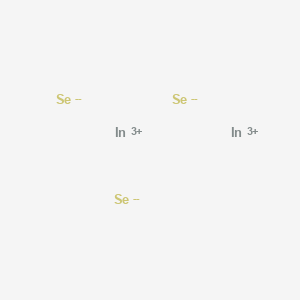
Indi(III) selenua có dạng tinh thể rắn màu đen, không tan trong nước, nhạy cảm với không khí. Nó là một hợp chất của indi và selen, được sử dụng trong các thiết bị quang điện. Hai pha phổ biến nhất là α và β, có cấu trúc phân lớp, trong khi γ là "cấu trúc wurtzite khuyết tật." Indi selenua (In2Se3) tồn tại ở 4 cấu trúc tinh thể (α, β, δ, γ). Pha α kim loại của selenua indium chuyển thành pha β dẫn nội tại dưới sự thay đổi của nhiệt độ. In2Se3 có thể được điều chế bằng cách kết hợp phân tích của các nguyên tố ở nhiệt độ 1000 đến 1100oC. Ảnh hưởng của sự biến đổi pha đến các đặc tính quang và điện của nó đã được báo cáo. Dạng tinh thể của indi(III) selenua có thể phụ thuộc vào phương pháp sản xuất, ví dụ màng mỏng γ-In2Se3 tinh khiết được sản xuất từ trimetylindium, InMe3 và hydro selenua, H2Se, sử dụng kỹ thuật MOCVD. Indi(III) selenua đã được chứng minh là có các đặc tính điện tử tuyệt vời ở dạng hai chiều (vài lớp) của nó. Do tính nhạy cảm với không khí của nó, một số quy trình đã được phát triển để bao bọc vật liệu để tích hợp trong các thiết bị điện tử.
Total rating:
Rating: / 5 star
Loading...
Interesting facts about chemistry you may not know
Interesting facts about hydrogen - the lightest element in the periodic table.
Hydrogen is the first element in the periodic system table. Hydrogen is known to be the lightest of all, the most abundant in the Universe, the essential element for life
View moreInteresting facts about helium
Helium is the first rare gas element in the periodic system table. In the Universe, it ranks second in abundance after elemental hydrogen.
View moreInteresting facts about lithium
Lithium is the alkali metal element, located in the third cell in the periodic table system. Lithium is the lightest of all solid metals and can cut a knife.
View moreInteresting Facts About Beryllium
Beryllium is the lightest alkaline earth metal. Beryllium is found in precious stones such as emeralds and aquamarine. Beryllium and its compounds are both carcinogenic.
View moreInteresting Facts About Carbon
Carbon is the non-metallic element in the sixth cell in the periodic system table. Carbon is one of the most important elements in all life, it is also known as the back.
View more