Search substance

Please enter substance to start the search

Note: You can search for multiple substances at the same time, each separated by a space, for example: Na Fe

Điểm khác nhau giữa chất 1,1-Dicloroetan và chất Niken(II) clorua

So sánh các tính chất vật lý, hoá học giữa chất 1,1-Dicloroetan và chất Niken(II) clorua


Điểm khác nhau giữa chất 1,1-Dicloroetan và chất Niken(II) clorua

Tính chất 1,1-Dicloroetan Niken(II) clorua
Tên tiếng Việt 1,1-Dicloroetan Niken(II) clorua
Tên tiếng Anh 1,1-Dichloroethane; Ethylidene chloride; unsym-Dichloroethane; Ethylidene dichloride; NCI-C-04535; RCRA waste number U-076; R-150a; 1-Chloro-1-chloroethane nickel(ii) chloride
Nguyên tử khối 98.9592 129.5994
Khối lượng riêng (kg/m3) 1.2 3550
Nhiệt độ sôi (°C) Rắn
Màu sắc Vàng nâu
Độ âm điện
Năng lượng ion hoá thứ nhất
Phương trình tham gia Phương trình CH3CHCl2 tham gia Phương trình NiCl2 tham gia
Phương trình điều chế Phương trình điều chế CH3CHCl2 Phương trình điều chế NiCl2

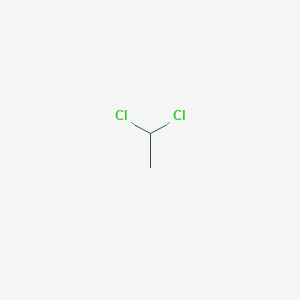
Substance CH3CHCl2 (1,1-Dicloroetan)

CH3CHCl2-1,1-Dicloroetan-1208

1,1-Dichloroethane là một chất lỏng nhờn, không màu, có mùi ngọt giống ete, ít tan trong nước. Nó dễ bay hơi ở nhiệt độ phòng và dễ cháy. Nó không xuất hiện tự nhiên trong môi trường, trước đây 1,1-dichloroethane được sử dụng làm thuốc gây mê phẫu thuật, nhưng nó không còn được sử dụng theo cách này nữa. Ngày nay nó được sử dụng chủ yếu để sản xuất các hóa chất khác, để hòa tan các chất như sơn, véc ni, chất tẩy hoàn thiện và tẩy dầu mỡ.
Substance NiCl2 (Niken(II) clorua)

NiCl2-Niken(II)+clorua-1167

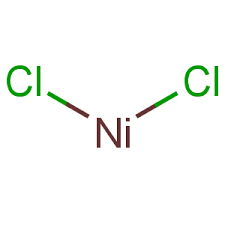
Niken(II) clorua (hoặc niken điclorua), là hợp chất vô cơ có công thức NiCl2. Muối khan này có màu vàng, nhưng muối ngậm nước NiCl2·6H2O thường gặp lại có màu xanh lá cây. Niken(II) clorua, trong các hình thức khác nhau, là nguồn cung cấp niken quan trọng nhất cho tổng hợp hóa học. Các muối niken(II) clorua dễ tan, hấp thụ độ ẩm từ không khí để tạo thành một dung dịch. Muối niken là tác nhân gây ung thư với phổi và hệ hô hấp, nếu tiếp xúc trong thời gian dài

Total rating:

Rating: / 5 star


Interesting facts about chemistry you may not know

Interesting facts about hydrogen - the lightest element in the periodic table.

Hydrogen is the first element in the periodic system table. Hydrogen is known to be the lightest of all, the most abundant in the Universe, the essential element for life

View more

Interesting facts about helium

Helium is the first rare gas element in the periodic system table. In the Universe, it ranks second in abundance after elemental hydrogen.

View more

Interesting facts about lithium

Lithium is the alkali metal element, located in the third cell in the periodic table system. Lithium is the lightest of all solid metals and can cut a knife.

View more

Interesting Facts About Beryllium

Beryllium is the lightest alkaline earth metal. Beryllium is found in precious stones such as emeralds and aquamarine. Beryllium and its compounds are both carcinogenic.

View more

Interesting Facts About Carbon

Carbon is the non-metallic element in the sixth cell in the periodic system table. Carbon is one of the most important elements in all life, it is also known as the back.

View more