Search substance

Please enter substance to start the search

Note: You can search for multiple substances at the same time, each separated by a space, for example: Na Fe

Điểm khác nhau giữa chất Icosane và chất 1,1-Dicloroetan

So sánh các tính chất vật lý, hoá học giữa chất Icosane và chất 1,1-Dicloroetan


Điểm khác nhau giữa chất Icosane và chất 1,1-Dicloroetan

Tính chất Icosane 1,1-Dicloroetan
Tên tiếng Việt Icosane 1,1-Dicloroetan
Tên tiếng Anh eicosane 1,1-Dichloroethane; Ethylidene chloride; unsym-Dichloroethane; Ethylidene dichloride; NCI-C-04535; RCRA waste number U-076; R-150a; 1-Chloro-1-chloroethane
Nguyên tử khối 282.5475 98.9592
Khối lượng riêng (kg/m3) 1.2
Nhiệt độ sôi (°C)
Màu sắc
Độ âm điện
Năng lượng ion hoá thứ nhất
Phương trình tham gia Phương trình C20H42 tham gia Phương trình CH3CHCl2 tham gia
Phương trình điều chế Phương trình điều chế C20H42 Phương trình điều chế CH3CHCl2

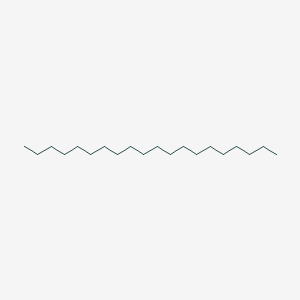
Substance C20H42 (Icosane)

C20H42-Icosane-425

Icosane có dạng tinh thể không màu hoặc chất rắn kết tinh màu trắng, là một ankan mạch thẳng bao gồm 20 nguyên tử cacbon. Nó đã được phân lập từ lá của cây Agave attenuata và có một vai trò như một chất chuyển hóa thực vật. Icosane ít được sử dụng trong ngành công nghiệp hóa dầu, vì điểm chớp cháy cao. N-Icosan (đồng phân cấu trúc mạch thẳng của icosan) là hợp chất ngắn nhất được tìm thấy trong sáp parafin dùng để tạo nến.
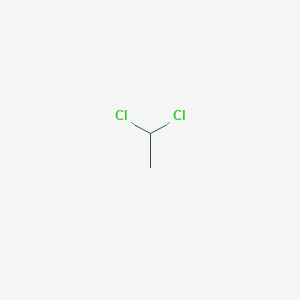
Substance CH3CHCl2 (1,1-Dicloroetan)

CH3CHCl2-1,1-Dicloroetan-1208

1,1-Dichloroethane là một chất lỏng nhờn, không màu, có mùi ngọt giống ete, ít tan trong nước. Nó dễ bay hơi ở nhiệt độ phòng và dễ cháy. Nó không xuất hiện tự nhiên trong môi trường, trước đây 1,1-dichloroethane được sử dụng làm thuốc gây mê phẫu thuật, nhưng nó không còn được sử dụng theo cách này nữa. Ngày nay nó được sử dụng chủ yếu để sản xuất các hóa chất khác, để hòa tan các chất như sơn, véc ni, chất tẩy hoàn thiện và tẩy dầu mỡ.

Total rating:

Rating: / 5 star


Interesting facts about chemistry you may not know

Interesting facts about hydrogen - the lightest element in the periodic table.

Hydrogen is the first element in the periodic system table. Hydrogen is known to be the lightest of all, the most abundant in the Universe, the essential element for life

View more

Interesting facts about helium

Helium is the first rare gas element in the periodic system table. In the Universe, it ranks second in abundance after elemental hydrogen.

View more

Interesting facts about lithium

Lithium is the alkali metal element, located in the third cell in the periodic table system. Lithium is the lightest of all solid metals and can cut a knife.

View more

Interesting Facts About Beryllium

Beryllium is the lightest alkaline earth metal. Beryllium is found in precious stones such as emeralds and aquamarine. Beryllium and its compounds are both carcinogenic.

View more

Interesting Facts About Carbon

Carbon is the non-metallic element in the sixth cell in the periodic system table. Carbon is one of the most important elements in all life, it is also known as the back.

View more