Search substance

Please enter substance to start the search

Note: You can search for multiple substances at the same time, each separated by a space, for example: Na Fe

Điểm khác nhau giữa chất Tryptophane và chất Indi triclorua

So sánh các tính chất vật lý, hoá học giữa chất Tryptophane và chất Indi triclorua


Điểm khác nhau giữa chất Tryptophane và chất Indi triclorua

Tính chất Tryptophane Indi triclorua
Tên tiếng Việt Tryptophane Indi triclorua
Tên tiếng Anh tryptophan Indium trichloride; Indium(III) chloride; Indium(III) trichloride; Indium chloride(InCl3); Trichloroindium(III)
Nguyên tử khối 204.2252 221.1770
Khối lượng riêng (kg/m3)
Nhiệt độ sôi (°C)
Màu sắc
Độ âm điện
Năng lượng ion hoá thứ nhất
Phương trình tham gia Phương trình C11H12N2O2 tham gia Phương trình InCl3 tham gia
Phương trình điều chế Phương trình điều chế C11H12N2O2 Phương trình điều chế InCl3

Substance C11H12N2O2 (Tryptophane)

C11H12N2O2-Tryptophane-414

Tryptophan là một loại bột màu trắng, không mùi. Tryptophan là loại axit amin ít phong phú nhất trong số 22 axit amin và là axit amin thiết yếu ở người (do thức ăn cung cấp), Tryptophan được tìm thấy trong hầu hết các loại protein và là tiền chất của serotonin. Tryptophan được chuyển đổi thành 5-hydroxy-tryptophan (5-HTP), lần lượt được chuyển đổi thành serotonin, một chất dẫn truyền thần kinh cần thiết trong việc điều chỉnh sự thèm ăn, giấc ngủ, tâm trạng và cơn đau. Tryptophan là một loại thuốc an thần tự nhiên và có trong các sản phẩm từ sữa, thịt, gạo lứt, cá và đậu nành.
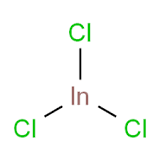
Substance InCl3 (Indi triclorua)

InCl3-Indi+triclorua-1082

Indi (III) clorua là một muối không màu được sử dụng trong tổng hợp hữu cơ như một axit Lewis. Nó cũng là dẫn xuất hòa tan sẵn có nhất của indi. Là một kim loại tương đối nhiễm điện, indi phản ứng nhanh với clo để tạo ra triclorua. Indi (III) clorua rất dễ hòa tan. Giống như AlCl3 và TlCl3, InCl3 kết tinh như một cấu trúc phân lớp bao gồm một sự sắp xếp clorua chặt chẽ chứa các lớp tâm In (III) được phối trí theo hình bát diện.

Total rating:

Rating: / 5 star


Interesting facts about chemistry you may not know

Interesting facts about hydrogen - the lightest element in the periodic table.

Hydrogen is the first element in the periodic system table. Hydrogen is known to be the lightest of all, the most abundant in the Universe, the essential element for life

View more

Interesting facts about helium

Helium is the first rare gas element in the periodic system table. In the Universe, it ranks second in abundance after elemental hydrogen.

View more

Interesting facts about lithium

Lithium is the alkali metal element, located in the third cell in the periodic table system. Lithium is the lightest of all solid metals and can cut a knife.

View more

Interesting Facts About Beryllium

Beryllium is the lightest alkaline earth metal. Beryllium is found in precious stones such as emeralds and aquamarine. Beryllium and its compounds are both carcinogenic.

View more

Interesting Facts About Carbon

Carbon is the non-metallic element in the sixth cell in the periodic system table. Carbon is one of the most important elements in all life, it is also known as the back.

View more